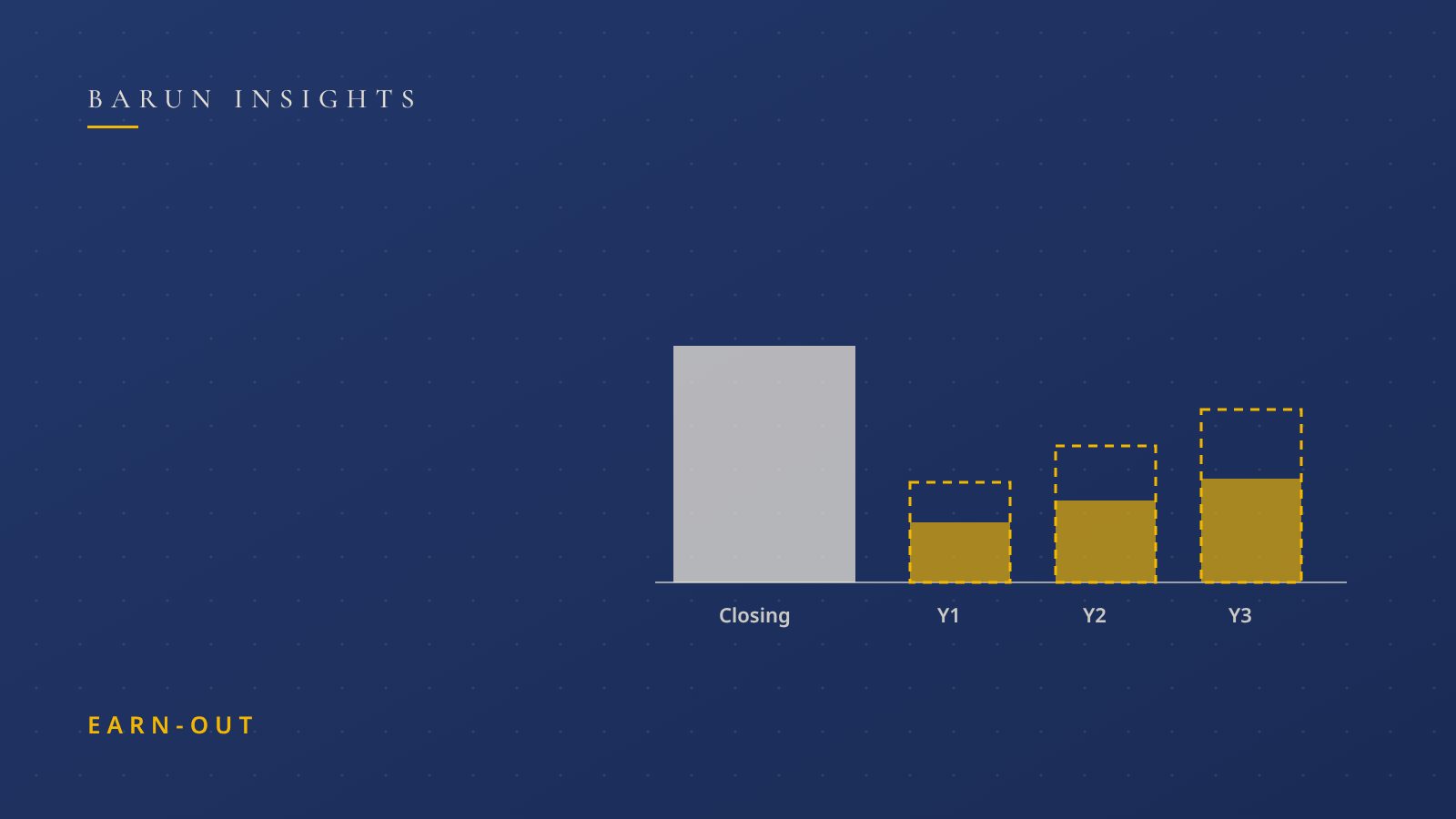
"Once next year's contract is signed, revenue doubles." When the seller's conviction meets the buyer's doubt, talks stall. An earn-out pays part of the price at closing and the rest according to performance over a set period afterwards.
When an earn-out fits
- Early-stage growth, where history understates future value
- A near-term event such as a major contract or licence approval
- A founder who stays on to run the business for a period
What to define
1. Metric: revenue or operating profit. Revenue is harder to manipulate and suits the seller; operating profit or EBITDA reflects profitability and suits the buyer. If profit is used, the contract must address head-office cost allocations, intra-group pricing and accounting policy changes.
2. Period and tiers. Usually one to three years. Pro-rata payments against targets cause fewer disputes than all-or-nothing hurdles.
3. Post-closing operating covenants. If the buyer merges the sales team or discontinues a product, the target becomes impossible. Sellers should ask for separate P&L tracking, retained key staff and budget, and no change of business without good reason.
4. Measurement and dispute procedure. Who prepares the numbers, whether the seller can inspect the books, and which accounting firm decides disagreements. This alone keeps many earn-outs out of court.
5. Acceleration events. If the buyer resells the business or breaches the agreement, the remaining earn-out becomes payable immediately.
Tax and accounting matter too
Depending on timing and character, earn-out payments can change when the seller's gain is recognised, or even whether part of it is treated as employment income. Where the founder keeps working after closing, review the structure with a tax adviser.
Earn-outs easily become a way of saying "let's agree now and argue later". Defining every number in the contract protects both sides.

Considering a transaction? Start with a conversation
Talk to usThese notes are general and are not advice on any specific transaction.